The Story Behind Wellwick Farm: Uncovering the History of Priory Fields, St Osyth
Heritage & Culture
The Story Behind Wellwick Farm at Priory Fields, St Osyth
Discover how centuries of farming, industry and local heritage have shaped the land that is now becoming Priory Fields.
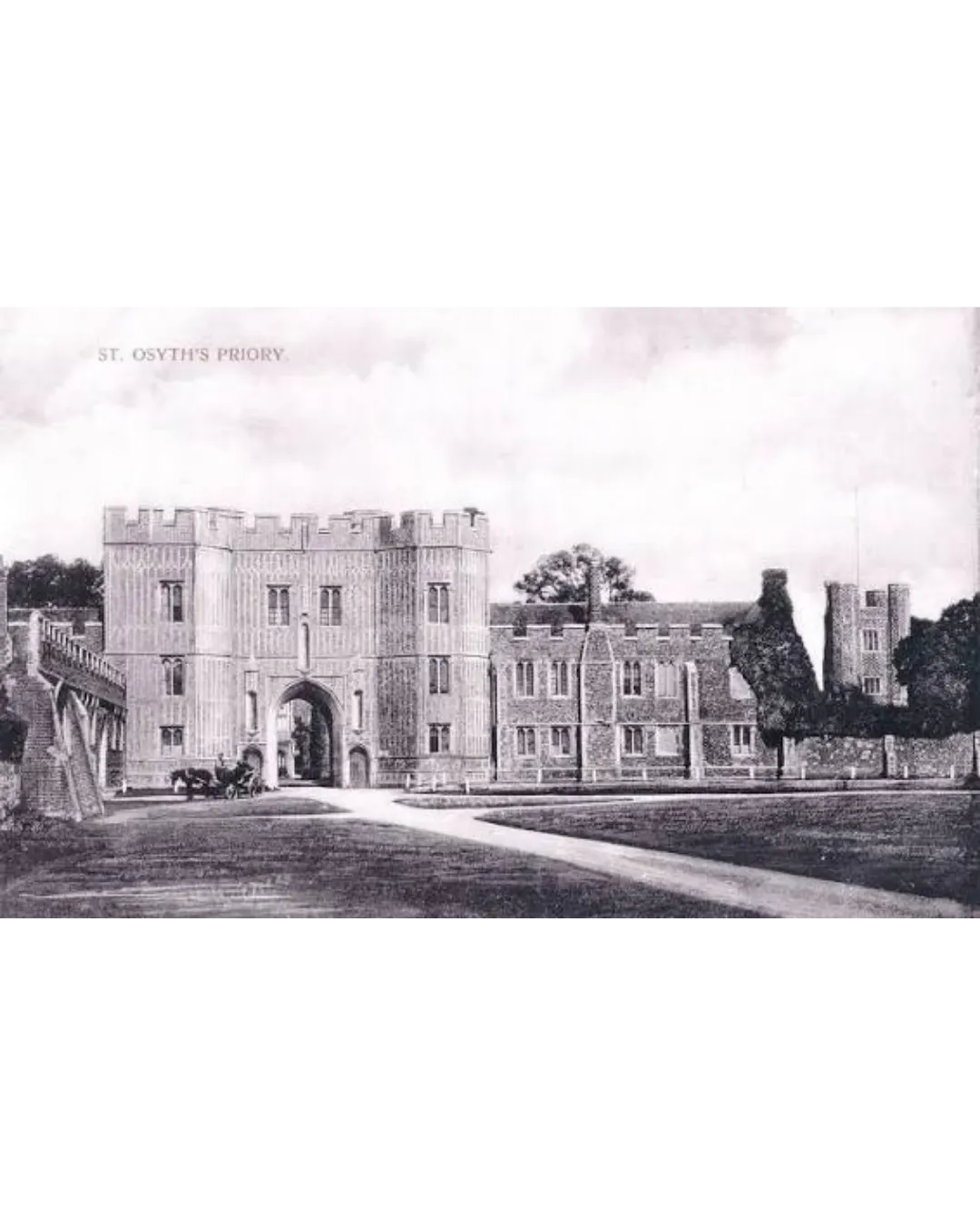
Did you know that the land now transforming into Priory Fields was once part of the historic Wellwick Farm, a holding belonging to the vast estate of St Osyth Priory?
The name Wellwick itself offers a fascinating glimpse into Essex's past. The word "wick" is thought to derive from ancient dairy farms that were once common along the county's coastline and marshlands. During medieval times, the marshes surrounding St Osyth were renowned for sheep grazing and dairy production, with records showing that large cheeses from the area were already being sold during the reign of Henry II in the 12th century.
At the heart of this story stands St Osyth Priory, founded around 1120 and regarded as one of the most influential religious institutions in Essex. For centuries, the priory played a central role in local life, controlling extensive areas of land and contributing significantly to the region's economy and development.
The priory's fortunes changed dramatically in 1539 during the Dissolution of the Monasteries, when its lands passed into Crown ownership. Over the years, the estate was associated with some of Tudor England's most powerful figures, including Thomas Cromwell, before becoming home to generations of aristocratic families. The historic site even welcomed royal visitors, among them Queen Elizabeth I, further cementing its place in England's rich history.
Although the name Wellwick first appears in historical records during the early 15th century, historians believe it originally referred to a wider area extending from Flag Creek and Wellwick Wharf inland towards the village of St Osyth. The landscape has changed considerably over the centuries, reflecting the evolving needs of the local community and economy.
What began as productive farmland later became the site of sand extraction works, before serving as a quarry and eventually a caravan park. Each chapter left its own mark on the land, demonstrating how the area continually adapted to changing times. Following restoration efforts, the site was prepared for a new future while retaining its connection to the past.
Today, as Priory Fields takes shape, it represents the latest chapter in a story that has been unfolding for hundreds of years. From medieval agriculture and the influence of St Osyth Priory to industrial use and modern regeneration, this landscape has continually evolved while remaining an important part of the village's heritage.
As new residents become part of the growing Priory Fields community, they are also becoming part of a much longer story, one shaped by farming, industry and community life for generations. It is a reminder that although Priory Fields looks firmly towards the future, its roots remain deeply embedded in the rich history of Wellwick Farm and St Osyth.